כשאנו חושבים על בישול, המחשבה הראשונה שעולה בדרך-כלל היא שיטות שמערבות חום, כמו בישול בנוזלים, טיגון, צריבה, אפיה או קליה. אך אפשר להסתכל על בישול באופן כולל יותר, כשינוי כימי ומבני בחומרי הגלם במטרה להפוך אותם לטעימים, נגיסים וקלים יותר לעיכול. המנגנון המרכזי שמשותף לרוב שיטות הבישול הוא דנטורציה, פתיחה ושינוי המבנה התלת-מימדי של החלבונים. אפשר להגיע לכך גם ללא חום כלל, למשל באמצעות שימוש בחומצה, בבסיס או בריכוזי מלח גבוהים.
הבישול החומצי
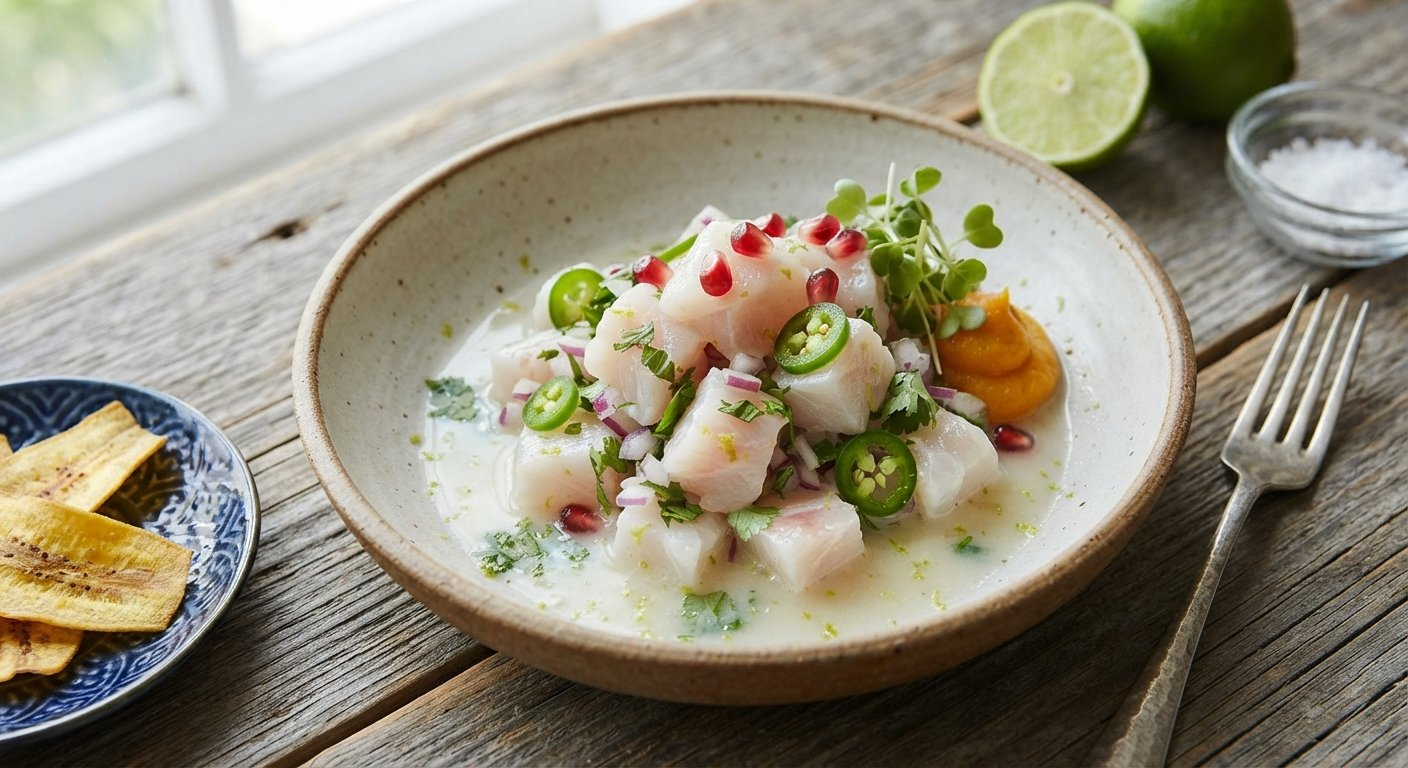
מנת הסביצ'ה, Ceviche,היא אולי המנה המפורסמת ביותר של "בישול קר" בעזרת חומצה. להכנתה משתמשים בעיקר בדגי ים לבנים וטריים כמו לברק, דניס או אינטיאס, בזכות טעמם העדין ומרקמם המוצק, אם כי גם דגים שומניים כמו סלמון מתאימים.
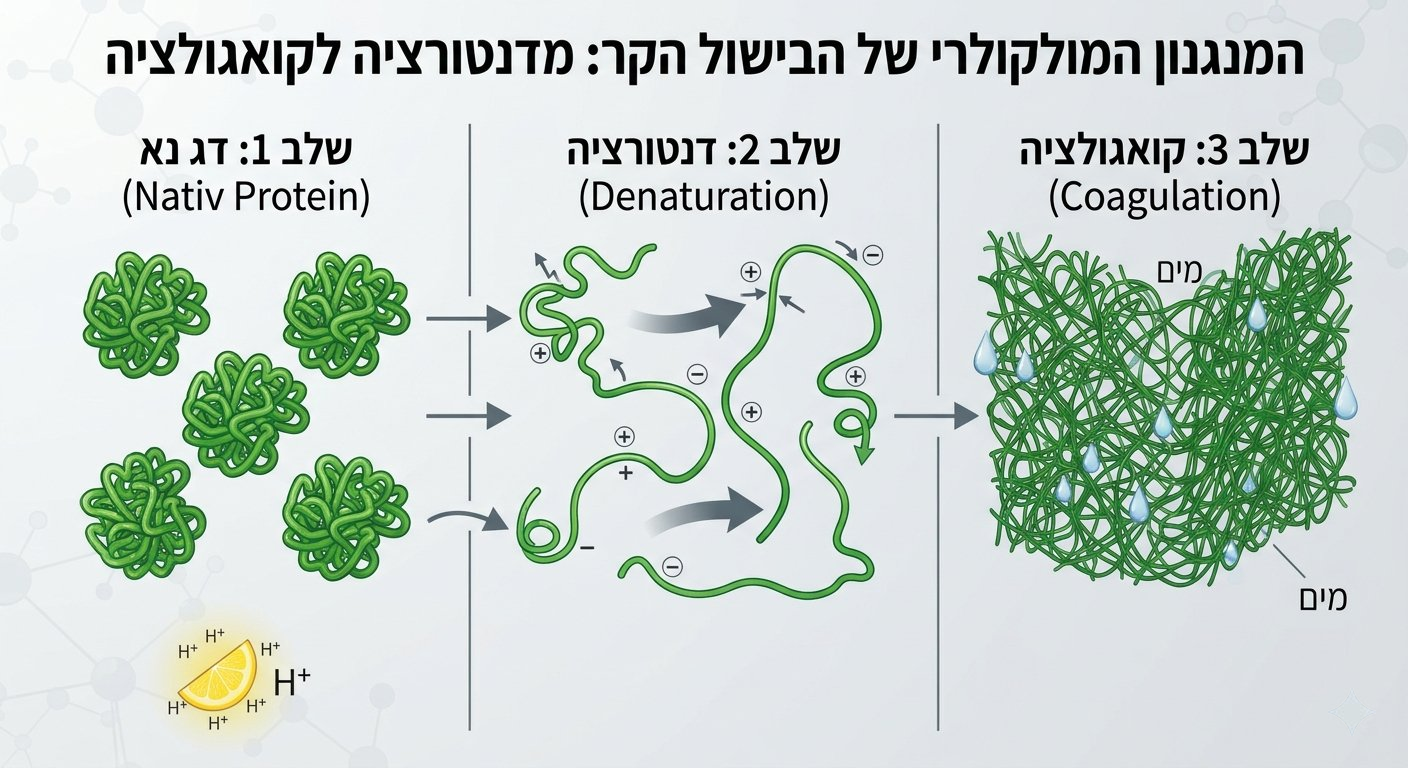
במצבם הטבעי, חלבוני הדג בנויים כשרשראות ארוכות ומקופלות, שמוחזקות יחד בקשרים כימיים ויוצרות מבנה תלת-ממדי יציב. כשמציפים את הדג במיץ לימון או ליים, רמת החומציות בסביבתו עולה, ורמת ה- pH יורדת. החומצה הציטרית משנה את המטענים החשמליים של החלבונים וגורמת לשרשראות המקופלות להיפתח ולהיפרס, לעבור דנטורציה. כעת, השרשראות הפרוסות מסתבכות זו בזו ויוצרות רשת חלבונים חדשה בתהליך של קרישה, קואגולציה.
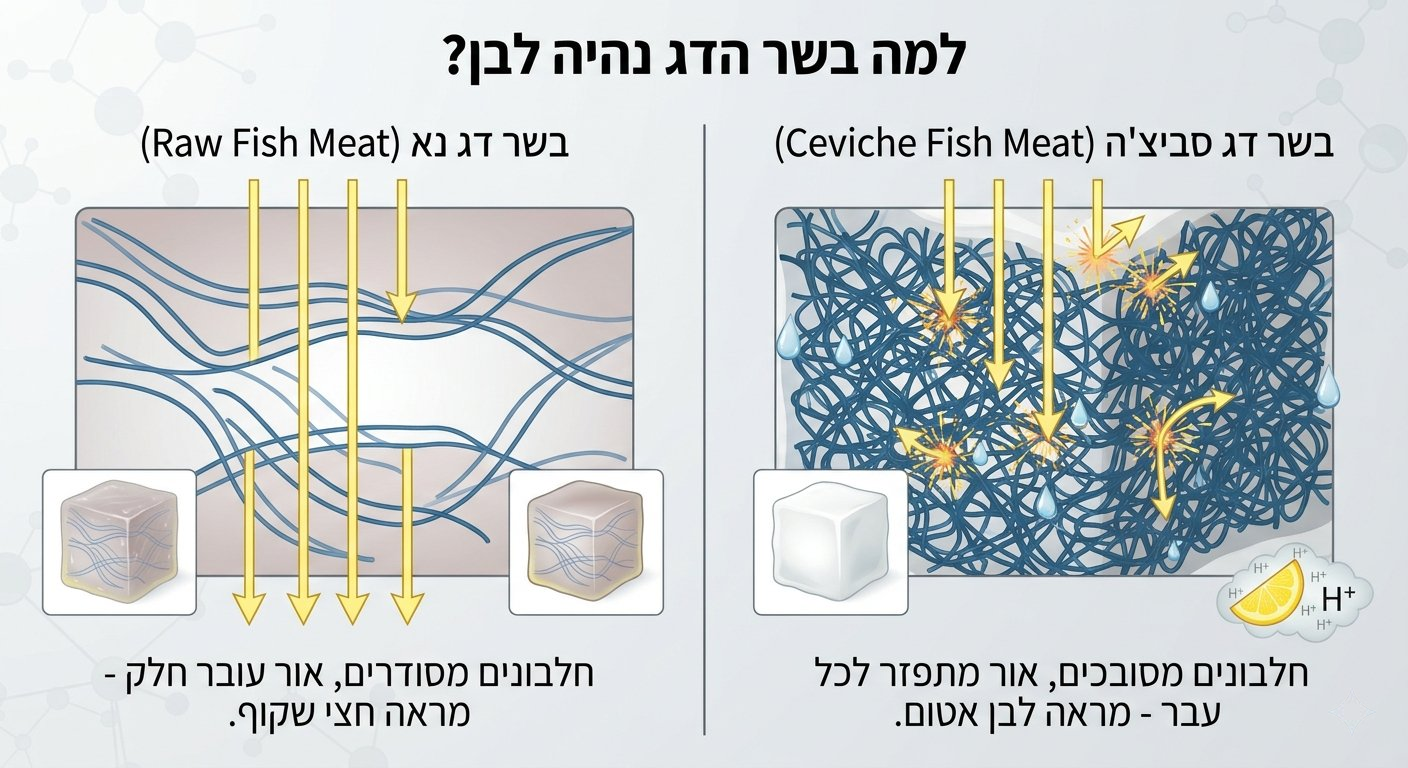
רשת החלבונים החדשה שנבנית משנה את מראה בשר הדג מרירי, חלקלק ושקוף, למוצק, אטום ולבן. השינוי הוויזואלי נובע מפיזור האור: כשהדג נא, החלבונים מסודרים באופן שמאפשר לקרני האור לעבור דרכם כמעט ללא הפרעה, מה שמעניק לו מראה חצי שקוף. בעקבות הכבישה החומצית, המבנה המולקולרי משתנה; כעת, קרני האור שפוגעות בדג נתקלות במחסומים רבים ומתפזרות לכל עבר, מה שנראה לעינינו כצבע לבן ואטום. זה אותו תהליך שמתרחש בחלבון הביצה כשמטגנים חביתה.
השעון הביולוגי של הסביצ'ה
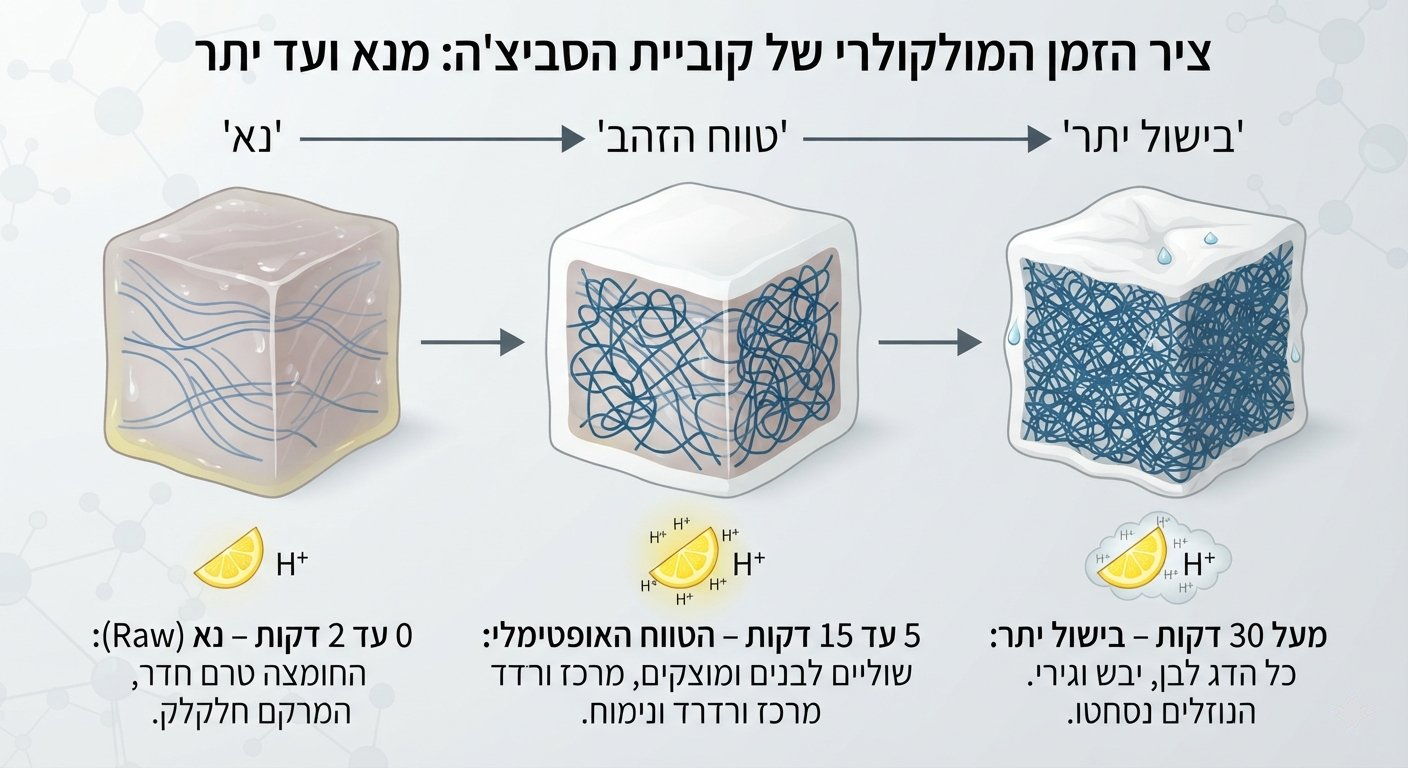
ההבדל המרכזי בין סביצ'ה רעננה לבין הרינג בתחמיץ, הוא זמן הכבישה. החומצה הציטרית שבלימון חודרת אל רקמת הדג בקצב ממוצע של כמילימטר או שניים כל מספר דקות. כיוון שבסביצ'ה זמן הבישול קצר, רואים את השינוי במרקם תוך דקות.
בשתי הדקות הראשונות, הדג נא. החומצה עדיין על פני השטח. הדג חלקלק, רך וחצי שקוף.
לאחר 5-15 דקות, זמן הבישול האידיאלי, החומצה מחלחלת פנימה ומבשלת את השכבה החיצונית של קוביות הדג. המעטפת הופכת לבנה, אטומה ומוצקה, ומרכז הקובייה נא, ורדרד, שקוף ונימוח. הניגוד במרקם ובמראה בין שתי השכבות הוא סימן ההיכר של סביצ'ה מוצלחת.
מעל 30 דקות, בישול יתר. החומצה מגיעה עד ללב הקובייה וממשיכה לגרום לדנטורציה של החלבונים. רשת החלבונים נעשית דחוסה וצפופה מדי והמים נסחטים החוצה. הדג מאבד את עסיסיותו והופך ליבש, מתפרק וקשה ללעיסה.
לכן, את מנת הסביצ'ה יש להגיש ולאכול מיד עם הכנתה.
עין הנמר
תוצר לוואי מבוקש של תהליך הכבישה הקצר הוא נוזל הסביצ'ה שנותר בקערה, שמכונה בפרו חלב הנמר, Leche de Tigre .מיץ הלימון השקוף הופך בהדרגה לנוזל חלבי, אטום ועשיר בטעמים. במקביל לדנטורציה של החלבונים ולקרישה שלהם, נדחקים מתוך תאי השריר מים, שומנים, חומצות אמינו חופשיות, וחלבונים קטנים. רכיבים אלה יוצרים אמולסיה של שמן במים – טיפות שומן זעירות וחלקיקי חלבון מפוזרים בתוך מיץ הלימון, שנותנים לו מראה חלבי וטעם מרוכז. בפרו נהוג לשתות את ה"חלב" הזה בכוס קטנה כזריקת אנרגיה או כתרופת פלא להנגאובר.
גלגוליו של מעיל. תושבי האיזור הכינו סביצ'ה אלפי שנים לפני שפירות ההדר הגיעו ליבשת אמריקה במאה ה-16 עם הכובשים הספרדים. לשם כך הם השתמשו בחומרים חומציים אחרים. בני תרבות המּוֹצֶ'ה, שחיו לפני כ-2,000 שנה, השתמשו בטומבו, קרוב משפחה חמוץ מאד של פרי הפסיפלורה. מאוחר יותר, בני האינקה השתמשו בצ'יצ'ה דה חורה, Chicha de Jora, בירת תירס שהחמיצה ותפקדה כחומץ אלכוהולי חזק. גם לאחר הגעת הלימונים, נהגו להשרות את הסביצ'ה בחומצה לכמה שעות או לילה שלם, כדי לשמר את הדג ולבשל אותו עד עומק הנתח, מתוך רתיעה מאכילת דג נא. הסביצ'ה המודרני הוא למעשה מנה חדשה שנוצרה במאה ה-20, כאשר המהגרים היפנים לפרו הביאו איתם את תרבות הסשימי, שמקדשת חיתוך מדויק של דג נא והגשה מיידית לשולחן.
מעבדה על הקרח
באוכל שלא בושל בחום חשוב לשים-לב להיבט הבטיחותי. טמפרטורת החדר או המקרר לא נמוכות מספיק כדי להשמיד פתוגנים. במנות שעוברות כבישה בחומץ בזמן ארוך, הדג מושרה בחומצה במשך שבועות, והחומצה מורידה את ה- pH של כל הנתח. בסביצ'ה, הזמן קצר מדי והחומציות במרכז הדג לא משתנה מספיק כדי לקטול פתוגנים במרכז הנתח.
כדי להתגבר על טפילי מעיים מסוכנים שעלולים להימצא בדגי ים, מעבירים את הנתח טיפול מקדים בהקפאה. ההקפאה הורגת את הטפילים בכמה אופנים במקביל, בראשם אוסמוזה, המים מחוץ לתאי הטפיל קופאים ראשונים, ונוצר הפרש ריכוזים שמוביל ליציאת מים מתאי הטפיל והתייבשותו,ו שיתוק מטבולי, האנזימים והחלבונים של הטפיל קופאים וכל פעילות הנשימה והחיים שלו נעצרת.
בישול בחום מול בישול בחומצה
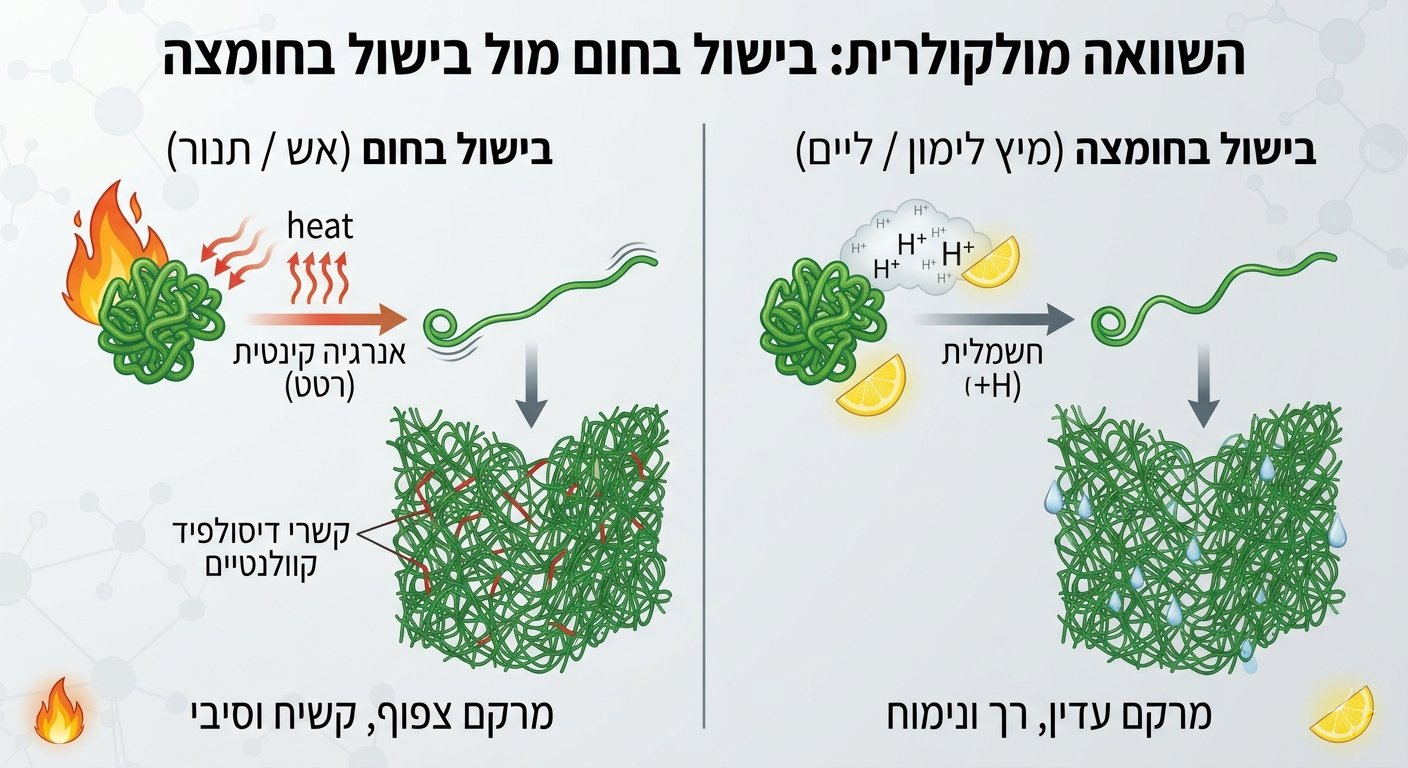
חומצה אמנם דומה לבישול בחום ברמת הדנטורציה והקרישה, אך ברמה המולקולרית קיימים בינן שתי השיטות כמה הבדלים מהותיים.
תגובות מאיאר (מייאר). ללא חום גבוה מעל 140 מעלות צלסיוס, לא מתרחשות תגובות מאיאר, תגובות ההשחמה שמובילות גם ליצירת מאות תרכובות טעם וניחוח חדשות, כמו שקורה על-פני הקרום של סטייק צרוב או לחם אפוי. לכן מנת הסביצ'ה שומרת על הטעמים הנקיים והרעננים המקוריים של הדג.
תנועה מול מטען חשמלי. חום גבוה מייצר אנרגיה קינטית שגורמת למולקולות לרטוט, לפרק קשרי מימן חלשים ולפתוח את מבנה החלבון. אבל חומצה לא מייצרת תנועה, היא פועלת דרך שינוי המטען החשמלי של חומצות האמינו. החלבון נפתח עקב דחייה חשמלית, ומבנהו המקורי לא נהרס לגמרי.
קשרי דיסולפיד, קשרי גפרית-גפרית חזקים. ההבדל במנגנון פתיחת החלבונים משפיע על סוג הקשרים הכימיים החדשים שנוצרים. חום גבוה ומתמשך מניע תגובות חמצון שיוצרות קשרי דיסולפיד קוולנטיים. אלה קשרים חזקים שמקבעים את רשת החלבונים כמבנה צפוף וקשיח. לעומת זאת, בסביבה חומצית לא מתרחש חמצון והקשרים האלה לא נוצרים. בסביצ'ה רשת החלבונים מוחזקת על ידי קשרים חלשים, קשרי מימן, מה שמסביר מדוע מרקם הדג עדין, רך ונימוח בהשוואה לדג אפוי או מטוגן.
עמידות רקמות החיבור, הקולגן. חום גבוה מסוגל לפרק את הקולגן הקשיח לג'לטין אבל חומצה לא משפיעה על קולגן בפרק הזמן הקצר של הכנת המנה. לכן מכינים סביצ'ה רק מדגים רכים, והשיטה לא מתאימה לנתחי בשר קשים.
אם זה טוב ואם זה רע, אין כבר דרך חזרה. דנטורציה היא תהליך בלתי-הפיך. ברגע שנהרס מבנה החלבון, אין דרך חזרה (למעט עם קולגן, שהוא החלבון היחיד שבו התהליך כן הפיך). תרגיל מחשבתי: ברמה הביוכימית התיאורטית, הדנטורציה שנגרמת מחומצה היא הפיכה עבור חלבון בודד, ותהליך החזרה נקרא רנטורציה. עקרונית, אם נשטוף את החומצה ונחזיר את ה- pH לרמה ניטרלית, החלבון יוכל להתקפל חזרה למבנה הנטיבי המקורי שלו, כיוון שהוא נפתח בעדינות ולא נשבר. אבל בפועל, התהליך בלתי הפיך בגלל הקרישה. שרשראות החלבון שנפתחו ונקשרו ביניהן יצרו רשת חלבונית תלת-מימדית מורכבת, כך שגם אם ננטרל את החומצה, החלבונים כבר כלואים בתוך הסבך ולא יוכלו להשתחרר כדי להתקפל מחדש.
ההבדלים בין בישול בחום לבישול בחומצה
| מאפיין | בישול בחום | בישול בחומצה – סביצ'ה |
| הגורם שמוביל לפירוק מבנה החלבון | אנרגיה קינטית ותנועת מולקולות | שינוי במטענים חשמליים של חומצות האמינו |
| הקשרים שנפגעים | בעיקר קשרי מימן ואינטראקציות הידרופוביות | בעיקר קשרים יוניים וקשרי מימן |
| פירוק רקמות חיבור | מפרק קולגן לג'לטין, מרכך נתחים קשים | לא משפיע על קולגן, נדרש חומר גלם רך מראש |
| השחמה ופיתוח טעמים | מפעיל את תגובות מאיאר ומוביל להשחמה וטעמי צלייה | אין השחמה, שומר על טעמים רעננים ומקוריים |
איורים: בינה מלאכותית


איזו השקעה.
יש לי כמה מתוני סביצה באנגלית מצרפת אם לא מתאים, תמחקי
Peruvian Seviche
The Peruvian cook cleans the fish and lets it soak in salt water for 10 minutes and then removes it and pats it dry.
1 lb fish fillets of corbina, red snapper, or any good quality whitefish
juice of three lemons
juice of three sour oranges or limes
one medium onion, thinly sliced
salt and pepper to taste
a pinch of cayenne pepper
1 clove of garlic, minced
1 hot pepper, chopped fine
2 tablespoons chopped parsley
2 tablespoons chopped cilantro (coriander)
Cut fish into pieces and place on a platter. Place the thinly sliced onions on the fish. Then add the remaining ingredients, covering with the juices. Place in refrigerator for at least 4 hours before serving. Serve on bed of lettuce and garnish with cold sweet potato or corn-on-the-cob.
Ecuadorean Seviche
In Ecuador seviche is served with potato chips, popcorn, sweet potatoes or kernels of corn that are about an inch long and almost as broad. Ecuadoreans usually combine three citrus juices plus vinegar in their seviche.
2 pounds whitefish
juice of 6 limes, 3 lemons, 3 sour oranges, or enough to make 2 cups juice
4 teaspoons salt
3/4 teaspoons black pepper
1/4 cup vinegar
2 medium onions sliced very thin
2 or 3 red or yellow hot peppers, slivered
cut fish into bite size pieces and place in a bowl. Pour juice over it. Add salt and pepper and vinegar. Let stand about 6 hours in refrigerator. Pour boiling water over the onions and drain. Add to the fish. Add slivered hot peppers and let set overnight.
Here is another version of Ecuadorean seviche using lemon juice only:
3 pounds corbina, washed thoroughly and dried with paper toweling
juice from about 25 lemons
2 onions (medium size) chopped
2 teaspoons salt
1 aji chombo, (hot pepper) cut into small pieces
Cut the fish into bite size pieces and place in glass bowl with one cup lemon juice and one teaspoon of salt. Let it set for 15 minutes and then drain, squeezing the fish gently. Add the remaining lemon juice or enough to cover the fish. Add the chopped onions and stir with a wooden spoon. Let set for 15 minutes. Then add the aji and the remaining salt. Let it set for 30 minutes, cover and place in refrigerator. It may be eaten in about 2 hours. (Segundo Franco).
Panama’s Corvina Seviche
1 pound fillets of corvina
juice from a dozen limes, more if necessary
3 medium size tomatoes, chopped fine
3 onions, chopped fine
2 hot peppers, remove part of it after it has
set about 2 hours
1 green pepper, chopped fine
1 clove garlic, minced
1 tablespoon finely chopped parsley
salt and pepper to taste
Place corvina fillets on a platter. Mix the remaining ingredients and spread over the fish, making sure it is completely covered. Let it set for a few minutes and then turn the fillets over so both sides of the fish are well marinated. Cover platter and place in refrigerator. Turn the fish several times. Can be eaten after 8 hours.
Shrimp Seviche
2 pounds of shrimp
approximately 10 lemons
1 hot pepper
1 chopped onion
1 teaspoon salt
Put raw shrimp in boiling water for 5 minutes. Remove and place in cold water immediately. Remove shells and clean shrimp. Place in a glass bowl with the lemon juice, the onion, pepper, and salt. Let it set for 1 hour and serve. (Franco)
Here is another variation of shrimp seviche:
2 pounds shrimp, cooked and cleaned
1/2 pound onions, chopped
1/2 bottle French’s mustard
1 1/2 teaspoon salt
1/2 cup olive oil
1/2 cup lime juice
1 hot pepper, chopped
Cut shrimp into pieces. Add remaining ingredients and marinate for about 8 hours. (Mrs. Stanley Fidanque).
Scallop Seviche
1 1/2 pounds scallops (Panama Bay scallops preferred)
1 hot pepper
1 tablespoon vinegar
1/4 teaspoon oregano
1/2 cup lime juice (or more if needed)
1 medium onion, chopped
1 clove garlic, mashed
2 teaspoons mustard pickle
3 tablespoons olive oil
2 tablespoons catsup
salt and pepper to taste
Clean scallops and put in a colander. Pour boiling water over them and let drain. Mix the onion and hot pepper (chopped very fine), garlic, mustard pickle, oregano, and vinegar. Put scallops into this mixture and let marinate for 30 minutes. Then add salt, pepper, olive oil, catsup, and lime juice. The lime juice should cover the mixture. Place in a glass container, cover and let stand in refrigerator 24 hours before eating. (Stir with a wooden spoon from time-to-time. Some metal spoons will tarnish from the acids.) (Mrs. Robert Rupp.)
La Fonda Del Sol’s Seviche
1 pound firm-fleshed, fresh, raw, whitefish, boned;
or scallops
1 cup lemon juice
1/3 cup lime juice
1/2 cup orange juice
2 tablespoons ketchup
1/4 teaspoon salt
1 cup finely chopped red onions
1 red pepper
1/2 of a small yellow hot chili pepper, grated or finely minced
lettuce
1/3 cup canned corn kernels
3 or 4 sprigs cilantro
parsley
About 5 hours before serving, remove all skin and dark meat from fish. Slice across fish (or scallops) making strips about 1 1/2 inches long by 3/4 inch wide, no thicker than 1/8 inch. Place fish in bowl; pour about 3/4 cup lemon juice over fish. Cover with plastic wrap and marinate at room temperature about 1 hour. Stir occasionally; let marinade reach all pieces. Meanwhile, prepare other marinade. Combine remaining 1/4 cup lemon juice, lime and orange juices with ketchup, salt, onion, and finely chopped red and green peppers; reserve two slices of peppers for garnish. Add hot chili pepper, if available, to this mixture. Drain and discard first lemon marinade; cover fish with seasoned marinade, using airtight container (onions emit a pwoerful aroma). Refrigerate 4 hours. Turn fish occasionally. Serve seviche over a bed of lettuce leaves on a chilled platter. Include chopped vegetables but drain most of the juice from fish. Garnish with sliced red and green pepper circles, corn kernels, finely chopped cilantro, and parsley. Provide toothpicks. Makes about 50 bite size servings.
(From: Culinary Capers by Fannie P. Hernandez. The Panama Canal Review, Feb. 1971.)
Big Corvina!
Picture taken by Tomas Carey at Panama City Fish Market, June 1999.
MORE Ceviche Recipes:
Gatun Tarpon Club Ceviche
7 lbs. firm white fish
(ie; barracuda, marlin, grouper, snook or corvina)
3 large green peppers
3 tablespoons salt, heaping
6 oz. apple cider vinegar
4 large onions
6 hot peppers plus seeds
1 qt. fresh lime juice
Remove all red meat from fish. Dice in 1/4 inch cubes. Put in large pan. Finely dice onions, sweet peppers and hot peppers. Lay diced vegetables on top of fish; add vinegar and salt, add the lime juice and stir about 5 minutes. Place contents into a gallon jar with lid. Let stand at room temperature for 1 hour; then refrigerate. Ready to serve in 3 hours. (R.J. “Butch” Tobin)
Ceviche de Corvina
1 lb. boneless corvina
1 1/2 cups finely chopped onion
1 1/3 cups fresh lemon juice
1/2 cup finely chopped celery
1/4 cup finely chopped fresh cilantro
1/2 hot pepper finely minced (optional)
Cut fish into bite-size pieces and place in a glass bowl, at least 2 inches high. Add all the other ingredients, mix, lemon juice should cover the fish. Cover with plastic wrap, put in refrigerator. Allow one day for fish to cook in the lemon juice. Garnish with onions, serve with crackers or saltines.
Escabeche of Corvina
2 lbs. fillets of corvina (or other firm white fish), boned and cut in bite size pieces
1/2 teaspoon garlic salt
1/4 teaspoon white pepper
1/4 teaspoon paprika
1/2 teaspoon curry powder
1 cup all-purpose flour
1/4 cup oil
3 garlic cloves; finely chopped
3 green peppers, julienned
3 medium onions, julienned
3/4 cup white vinegar
1/4 cup water
salt to taste
1 bay leaf
dash of paprika
Season the fish with the garlic salt, paprika, white pepper and curry powder. Dip the pieces in the flour and fry them in hot oil until browned. Drain and place in a glass bowl or pyrex dish.
Cook the garlic, pepper and onions in the hot oil from 3-5 minutes. Place the vegetables in a bowl with the vinegar, water, salt, bay leaf and paprika. Mix well. Pour over the fish and let cool. Cover with plastic wrap. Place in refrigerator for 24 hours. Serve cold.
Willy’s Hot Shrimp Ceviche
Ingredients:
500 grams (1 lb.) peeled fresh shrimp
1 onion, sliced as thin as possible
2 stalks celery, finely diced
1 aji chombo pepper, finely diced
3 limes
1 teaspoon minced fresh culantro
1/2 teaspoon salt
1 tablespoon vegetable oil
1 Tablespoon garlic powder
1/2 teaspoon ground black pepper
Saute the garlic and black pepper. Add the shrimp and salt and stir. When the shrimp turns color, add the aji chombo and other ingredients. Cover, lower heat, simmer for about 10 minutes. Test for flavor – the longer you cook this, the more the oils in the pepper and aji chombo are released into the rest of the food, so it gets spicier. Serve this with boiled yucca or potatoes. (From The Panama News & Friends.)
תודה רבה.
הכנת את כולם? המלצות?
תודה רבה.
אנסה, אם כי בת זוגי לא אוהבת חמוץ, כך שנראה לי שזה יהיה רק על עצמי.